Master the Art of the Tri-Fold: A Designer's Layout Blueprint
There’s a specific kind of pressure that hits when you’re handed a blank canvas for a tri-fold brochure. You have six distinct panels to manage, information that needs to flow logically, and a requirement to grab attention in a split second. It’s a format that seems simple on the surface, but anyone who has tried to align margins across a folded piece of paper knows it can quickly become a game of millimeter precision. Whether you are a freelancer trying to impress a client, a small business owner promoting a new service, or a marketing manager planning a trade show handout, the layout is the skeleton that holds the entire project together. Getting it wrong means your text gets lost in the fold, or your headline is awkwardly cut off. Getting it right means a seamless visual journey that guides the reader exactly where you want them to go.
Why Structure Matters More Than You Think
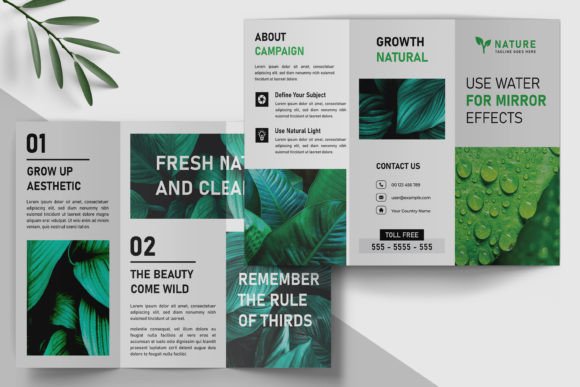
When we talk about a Trifold Brochure Layout Design, we aren't just talking about splitting a page into three parts. We are talking about a narrative structure. The front cover is your handshake, the inside panels are your conversation, and the back panel is your business card. If you are working with a high-quality template, particularly one provided in formats like EPS, PSD, INDD, or DOCX, you are already miles ahead. These formats allow for deep customization, meaning you aren't stuck with static images. You can move vector shapes, swap out fonts, and adjust the color palette to match your specific brand identity.
The beauty of a modern typography and clean design approach is that it offers breathing room. A cluttered brochure feels cheap; a clean one feels authoritative. When you utilize a template that emphasizes professional, clean design, you leverage the principles of white space and hierarchy without needing a degree in fine art. It allows you to focus on your message—whether that’s a menu for a new restaurant, a service list for a law firm, or a product launch announcement—knowing the visual architecture is sound.
Versatility: From Print Shops to Digital Screens
One of the most common misconceptions is that print materials are strictly for ink and paper. While a CMYK color scheme and standard paper size are essential for a print ready file, a well-designed trifold has a second life online. Think about your digital products or marketing assets. You can flatten the brochure and send it as a PDF to your email list, or break apart the panels to create a series of social media graphics. A single well-designed brochure can feed your Instagram feed for a week if you repurpose the individual elements correctly.
For those involved in packaging design or editorial design, the trifold format offers a compact way to present dense information. It forces you to be concise, which is often a blessing in disguise for content creators. Instead of writing a 2,000-word blog post, you have to distill your value proposition into bite-sized chunks that fit into these columns. This constraint often leads to sharper, more impactful copy. Furthermore, because these templates are 100% editable with well-organized layers, you can easily adapt the layout for an A4 or Letter size depending on your region, ensuring your design looks crisp no matter where it’s printed.
Practical Workflow: Speed and Efficiency
Time is the one resource we can't manufacture. If you are a small business owner wearing ten hats, you don't have hours to spend kerning text or drawing bleed lines. This is where the utility of an easy edit template shines. The ability to instantly download a file and immediately start dragging and dropping your assets is a game-changer. You want a layout where the layers are well organized—meaning you can isolate a background image, change its opacity, or swap a placeholder logo without breaking the rest of the design.
Consider the technical side for a moment. Using a free font that is included with the download removes the headache of licensing issues for your mockups, though you should always double-check the license for commercial use in your final production. The workflow is simple: open the file in your preferred software, whether that’s Adobe Illustrator for vector precision or Microsoft Word for accessibility, and make it yours. The goal is to spend your energy on the message and the offer, not fighting with the software.
Strategic Applications for Brand Growth
A brochure isn't just paper; it's a portable billboard. For entrepreneurs and marketers, the layout design serves as a physical touchpoint in a digital world. When you hand someone a tactile piece of marketing, the weight of the paper and the quality of the design communicate value before they read a single word. This is crucial for invites, events, and launches. A high-end product launch deserves a high-end aesthetic. If your brochure looks amateurish, it casts a shadow on the product itself.
Visual consistency is key here. By using a standardized layout, you ensure that your brand recognition grows. The colors, the typeface, and the imagery should all sing the same song. This consistency builds trust. When a customer sees your brochure, and then visits your website or sees your poster, the visual language should be familiar. It reassures them that they are dealing with a professional entity. Whether you are designing for a corporate client or creating merchandise inserts, the trifold remains one of the most versatile formats in the designer's toolkit.
Finalizing Your Design for Impact
Before you hit the export button, take a moment to view the design as a whole piece, but also as individual panels. Does the front cover hook the viewer? Does the inside spread have a logical flow? Is the contact information on the back easy to find? These are the questions that separate a good design from a great one. Remember, the layout is the stage, and your content is the actor. Ensure the stage doesn't upstage the performance.
Ultimately, a Trifold Brochure Layout Design is about communication. It’s about taking a complex set of information and making it digestible, attractive, and actionable. Whether you are a hobbyist making a program for a local event or a creative professional building a portfolio, mastering this format opens up a world of possibilities for tangible, impactful communication.